
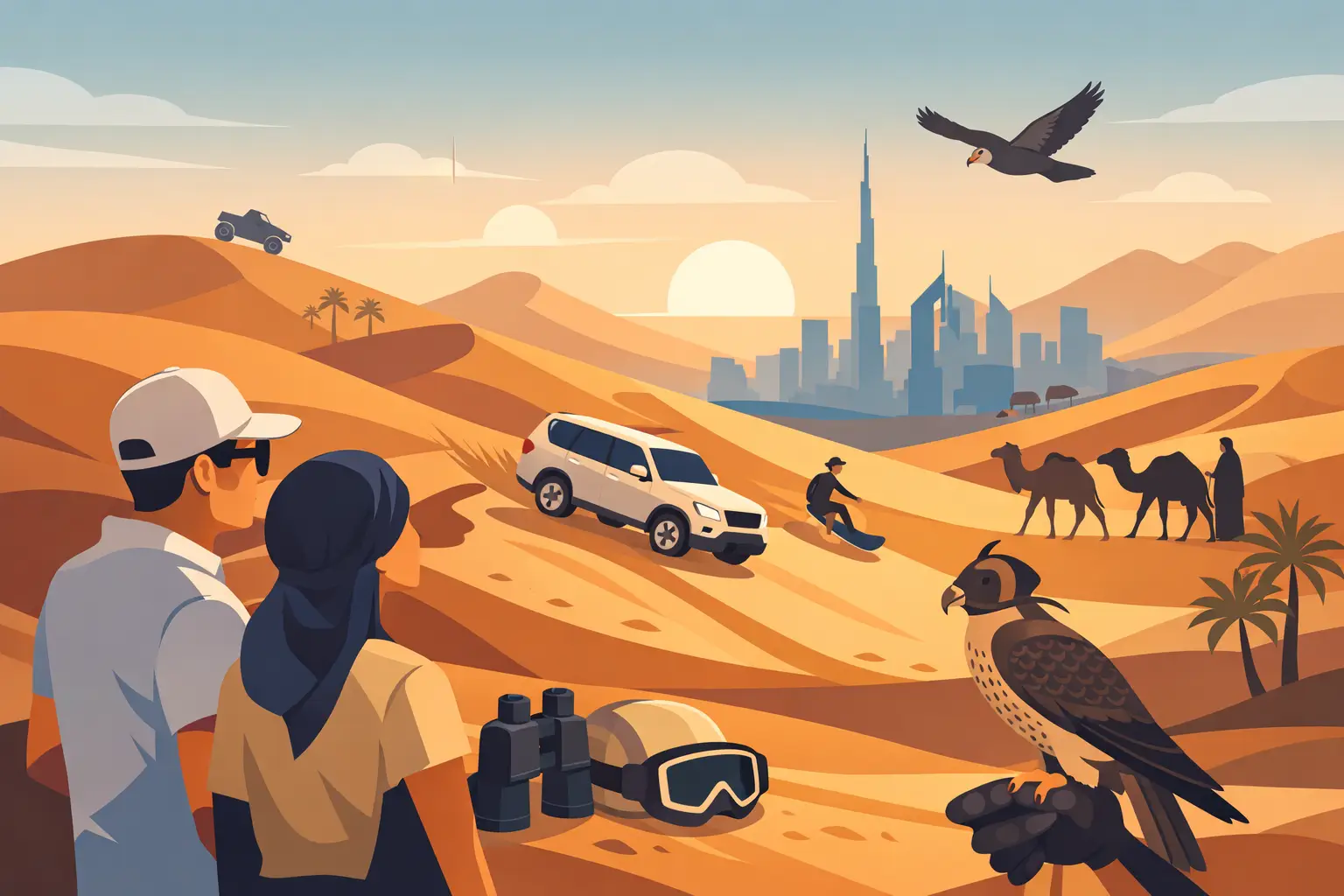
The moment your 4×4 leaves the city road and the red dunes rise ahead, Dubai feels very different. A desert safari should be thrilling, scenic and easy to enjoy, not something you spend worrying about. Dubai safari safety starts with choosing a properly managed experience, then making a few sensible decisions about your health, clothing and activity level before hotel pickup.
For most visitors, a professionally run safari is a comfortable and memorable part of a Dubai holiday. The key is matching the tour to your group. Fast dune driving may suit adventure-minded couples and older children, while a gentler desert programme can be a far better choice for younger families, grandparents or anyone who simply wants the sunset, camel ride and barbecue dinner without the bumps.
Dubai safari safety begins before pickup
A reliable operator should make the practical details clear before you book: collection time, approximate return time, what is included, whether dune bashing is part of the programme, and any restrictions for children or guests with medical concerns. Transparent information is not a small detail. It helps you decide whether a shared safari, private vehicle or quieter evening in the desert is right for you.
Ask direct questions if anything is unclear. Tell the booking team about pregnancy, back or neck problems, recent surgery, heart conditions, severe motion sickness, mobility needs or very young children. These do not always mean you must miss the desert altogether, but they can mean that dune bashing or independent driving activities are unsuitable. A good local team will offer practical alternatives rather than encourage you to take a risk.
At The 7 Tours, the aim is to arrange the experience around the people travelling, not force every guest into the same itinerary. A private safari can be especially useful when your family needs a more flexible pace, a child seat, extra assistance or the option to skip high-energy driving.
Choose the right level of dune driving
Dune bashing is controlled off-road driving over soft sand in a 4×4. It can involve steep climbs, descents and side slopes, so it is naturally more physical than a standard road transfer. Experienced desert drivers read the terrain, keep suitable distance from other vehicles and adjust their route for sand conditions. Even so, it is not a gentle ride.
If you enjoy rollercoaster-style excitement and have no relevant health concerns, it may be the highlight of your evening. If you are unsure, say so before departure. Many safari plans can include a scenic transfer to the camp or a calmer route while other guests take part in dune bashing. Missing one activity does not mean missing the desert sunset.
Never request more aggressive driving than your driver considers appropriate. Desert conditions change with wind, visibility and the softness of the sand. The safest driver is not the one trying to create the biggest reaction in the vehicle. It is the one who stays measured, alert and in control.
What safe desert transport looks like
Your vehicle should be suitable for desert use, well maintained and fitted with working seat belts. Buckle up for the full journey, including the short stretches between the dunes and camp. Keep arms, hands and mobile phones inside the vehicle, and avoid distracting the driver during technical sections of the route.
Professional drivers prepare for the desert rather than treating it as an ordinary road journey. This includes checking the vehicle, tyres and recovery equipment, carrying water and communication equipment, and understanding the planned route. In the unlikely event a vehicle gets stuck in soft sand, remain inside unless the driver instructs otherwise. Walking away from the vehicle is never a sensible response in the desert.
For children, confirm the operator’s age guidance in advance and request an appropriate child seat where required. Age rules can differ according to the activity, especially for dune buggies, quad bikes and more intense dune driving. Do not assume that a child who is comfortable in a city car will enjoy a bumpy off-road ride. Bring a familiar snack, water and something light for the journey if that helps them settle.
Quad bikes and dune buggies need a different mindset
A guided quad-bike or dune-buggy session can be an exciting addition to a safari, but it comes with more personal responsibility than travelling as a passenger in a 4×4. Listen closely to the safety briefing, wear the helmet and any provided protective equipment correctly, and follow the guide’s route and spacing instructions.
The most common avoidable mistake is treating open sand like a racetrack. Dunes can hide steep drops, soft patches and other riders on the far side. Keep both hands on the controls, travel at a speed that matches your experience, and never attempt sharp turns, jumps or climbs outside the designated area. If you have never ridden before, choose a supervised beginner-friendly option rather than the most powerful vehicle available.
Children should only ride where the operator confirms it is permitted and suitable for their age and size. Adults should not carry extra passengers unless the vehicle is designed for it and the guide has specifically approved it. Alcohol and driving activities do not mix, so save any drinks for later at camp.
Dress for comfort, sun and sand
You do not need specialist expedition clothing for a Dubai safari, but practical choices make the experience more enjoyable. Light, breathable clothing works well in the afternoon, while a light jumper or overshirt can be useful after sunset between roughly November and March. Closed shoes or secure sandals are better than loose footwear for walking on sand and taking part in activities.
Sunglasses, sun cream and a hat are worthwhile, particularly on afternoon departures. The desert sun can feel stronger than expected, even when the city weather seems mild. Bring a small amount of water for collection and the drive, although reputable safari programmes normally provide refreshments at camp. Avoid carrying valuable loose items that could be misplaced in the sand.
If you wear contact lenses, consider bringing lubricating drops or glasses for buggy and quad-bike activities. Sand and wind can irritate eyes, especially when you are moving at speed. A scarf or light face covering can also be helpful, but it should not interfere with a helmet or your ability to see clearly.
Food, weather and camp comfort
Desert camps are designed for visitors, with seating, refreshments and evening entertainment, but they remain outdoor settings. Let your operator know about allergies, vegetarian requirements or other dietary needs when booking rather than waiting until dinner is served. This gives the team the best chance to prepare suitable options.
Weather is usually favourable for safaris, yet desert conditions can change. Wind may lift sand, evenings can turn cool in winter, and summer heat requires extra care with hydration. Follow guidance if a route, driving session or outdoor activity is adjusted due to weather. A small change to the timetable is preferable to pressing on in poor conditions.
Camel rides are generally short and guided, but they still require a little care. Follow the handler’s directions, hold on as the camel stands and sits, and avoid sudden movements. Guests with balance difficulties or relevant medical concerns may prefer to enjoy photographs beside the camels instead.
A few simple habits make the evening safer
Eat a light meal before collection if you are prone to travel sickness, and consider your usual motion-sickness remedy after checking it is suitable for you. Avoid a heavy lunch immediately before dune bashing. Tell the driver promptly if you feel unwell, rather than trying to push through discomfort.
Keep your mobile phone charged, but stay present around vehicles, animals and activity areas. Use designated paths at camp, supervise children closely after dark, and do not wander away from the group to take photos in unmarked parts of the desert. The best photographs are not worth becoming separated from your driver or guide.
A Dubai desert safari is at its best when the adventure feels well looked after from pickup to drop-off. Choose the pace that suits your group, be honest about health and confidence levels, and let your driver or guide lead the way. That leaves you free to enjoy the shifting dunes, the evening sky and the quiet that makes the desert so special.